
Caregiver: You’re No Longer Just Parenting
Understanding your role as a caregiver of an individual with disabilities
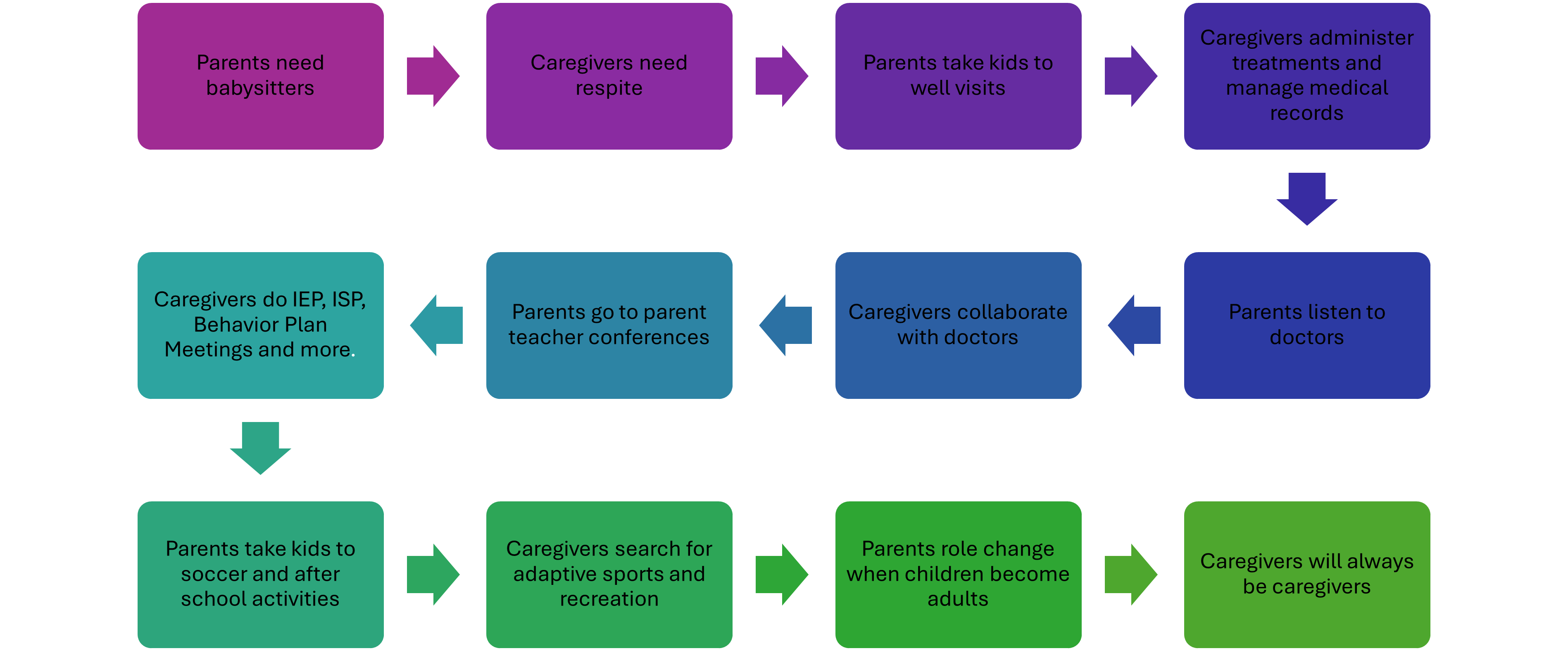
So, what defines you as a caregiver of individuals with disabilities?
Compassionate and Specialized Care
A caregiver for individuals with disabilities is characterized by compassion, patience, and specialized knowledge. They provide individualized care tailored to each individuals specific needs, ensuring their physical and emotional well-being. This involves understanding various disabilities, therapeutic techniques, and using adaptive equipment to support daily activities such as feeding, dressing, bathing, and mobility.
Emotional Support and Advocacy
In addition to physical assistance, caregivers offer emotional support, helping individuals build confidence and social skills. They act as advocates, ensuring individuals receive the appropriate services, accommodations, and educational opportunities. Effective communication with the individual, their family, and other professionals is crucial, requiring caregivers to be skilled in both verbal and non-verbal communication methods.
Safety, Collaboration, and Adaptability
Caregivers also prioritize safety and health management, collaborating with parents, teachers, therapists, and medical professionals to create cohesive care plans. Flexibility and adaptability are essential, as the needs of individuals with disabilities can vary widely. Overall, caregivers are dedicated to enhancing the quality of life for the individuals they support, helping them achieve their full potential in a nurturing environment.
So how do we best advocate for ourselves as caregivers? To receive the supports and services we need?

We can start with a caregiver assessment
A caregiver assessment is a systematic process of gathering information from a caregiver to identify specific problems, needs, strengths, and resources of that caregiver. This tool will help to identify challenges or gaps in knowledge and skills, resources and supports that could be useful and acceptable to this caregiver. The goal of the screening is to provide knowledge of what services or supports are likely to benefit this caregiver. While helping them to better understand their role of a caregiver.
Behavioral Healthcare Services
Provide
Behavioral Healthcare Services can provide assessments and help you determine what your needs are.
Help
Behavioral Healthcare Services can help you develop coping strategies to manage the emotional challenges of caregiving.
Support
Behavioral Healthcare Services can support you in developing tools for navigating systems of services for you and your individual with disabilities.

Here Are Some Resources For Caregivers
Mother 2 Mother is a 501(c)(3) organization dedicated to supporting mothers and caregivers of individuals with disabilities. They provide resources, education, empowerment, and community support through monthly support meetings, training workshops, and events. The organization emphasizes cultural sensitivity and offers a judgment-free environment for parents to share experiences and gain confidence in their caregiving abilities. Mother 2 Mother also collaborates with community organizations to provide comprehensive support and advocacy for families.


LifeCourse Nexus provides innovative tools and resources designed to empower individuals with disabilities and their families. Their approach focuses on creating a vision for a good life, identifying supports, and developing plans that are person-centered and family-driven. By offering training, workshops, and a comprehensive framework, LifeCourse Nexus helps individuals navigate their life journey, ensuring they have the necessary resources and support to achieve their goals and live fulfilling lives.
Hope Behavioral Health provides comprehensive mental health and counseling services aimed at enhancing the quality of life for individuals and families. They offer a wide range of services including individual therapy, couples counseling, family counseling, grief services, and spiritual care. Their approach is culturally competent, spiritually sensitive, and trauma-informed, ensuring that care is personalized and respectful of each individual’s background and needs. With both in-person and virtual options, Hope Behavioral Health is dedicated to making mental health support accessible and effective for all its clients.


 Resource, Education and Community Help Services